
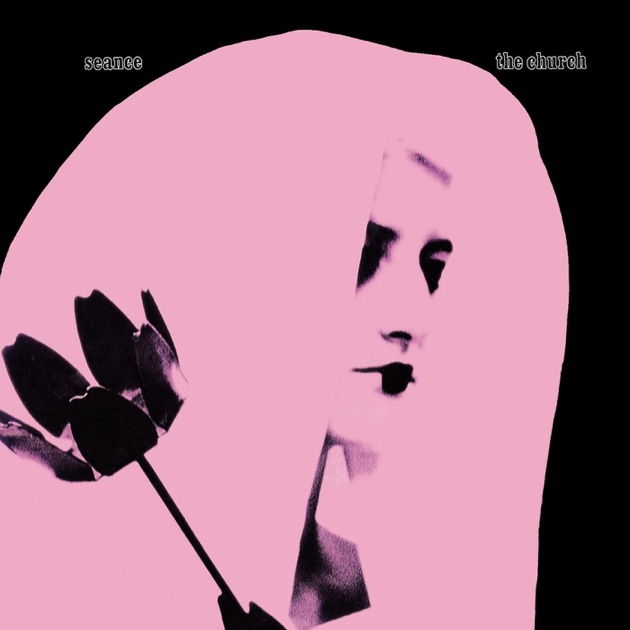
It starts with a magazine, a fleeting mention in Rock & Folk, buried among the usual suspects of influence lists. The Church. Never heard of ‘em. Then you see the cover of their 1983 album Seance: a girl, eyes half-closed, bathed in pink and black, like she’s channeling some cosmic ritual. It’s less rock album art, more abstract fever dream—a canvas that screams mystery before you even drop the needle. You brace for noise, for goth theatrics, for something loud and jagged. But when you hit play on “One Day,” the opening track, it’s not a scream. It’s a whisper. And it’s got you.
The Church, those Australian purveyors of post-punk melancholy, don’t assault you—they seduce you. “One Day” unfolds like a slow-burning Polaroid, all soft edges and creeping beauty. The guitar riff, courtesy of Marty Willson-Piper, loops like a quiet obsession, each note a thread pulling you deeper into the song’s spell. Steve Kilbey’s voice—cool, almost spoken, detached yet dripping with feeling—doesn’t beg for your attention. It just takes it. “I’m not in love with you,” he murmurs, and you’re not sure if he’s lying to you or himself. Either way, you’re hooked.
This is 1983, mind you. The airwaves are thick with synth-pop gloss and hair-metal shrieks, but The Church, formed in Sydney in 1980, carve their own path. They’re not trying to out-snarl Joy Division or out-weep The Cure, though you can hear those shadows in the mix. There’s a hint of Bowie’s shape-shifting cool, too, in the way they balance mood and melody. Seance, their third album, was a pivot—less raw than their debut, more atmospheric, a bridge to the jangly dreamscapes of their later hit “Under the Milky Way.” But “One Day” is the heart of it, a track that feels like it’s been waiting in the wings for decades, ready for rediscovery.
Let’s talk sound. The drums, steady and unhurried, anchor the track like a heartbeat. The bass, Kilbey’s own, pulses with a understated menace, while the guitars—God, those guitars—weave a tapestry that’s equal parts hypnotic and haunting. It’s post-punk with a dream-pop glow, a song that doesn’t need to shout to be heard. It’s made for headphones, for late nights when the world’s too loud and you need something to sink into. Play it alone, in the dark, and it’s like the song’s speaking just to you, a secret you didn’t know you needed.
What’s wild is how a song this subtle, this unassuming, still feels so alive in 2025. Maybe it’s the timelessness of its mood—longing, introspection, a touch of melancholy that hits whether you’re cruising Sydney’s streets in ‘83 or scrolling Spotify in a Brooklyn coffee shop. Maybe it’s the way The Church never got the memo to overplay their hand. They didn’t chase the spotlight like their ‘80s peers; they just made music that lingers, like smoke you can still smell hours later. “One Day” isn’t a chart-topper—it peaked modestly in Australia and barely rippled elsewhere—but it’s the kind of track that finds you when you’re ready.
And find me it did. That Rock & Folk mention sent me down a rabbit hole, from Seance to the band’s sprawling discography, 26 albums deep and counting. The Church never stopped creating, even if they never quite cracked the mainstream. Their cult status feels earned, not manufactured—a badge for those who know. “One Day” is their invitation, a gateway drug to a band that’s been quietly weaving magic for over four decades.
So why does this song hit so hard? It’s the restraint. In an era of excess—big hair, bigger egos—The Church went small, intimate, real. Kilbey’s lyrics don’t spell it all out; they leave room for you to fill in the blanks. “One day, I’ll leave you,” he sings, and it’s less a breakup line, more a meditation on impermanence. The song’s a vibe, a mood, a subtle slap that says you’ve been sleeping on something special.
If you’re chasing that post-punk buzz, that new-wave high, or just a sound to soundtrack your 3 a.m. thoughts, “One Day” is waiting. It’s not loud, but it echoes. It’s not new, but it feels like it was made for right now. Dig it out. Let it haunt you.