
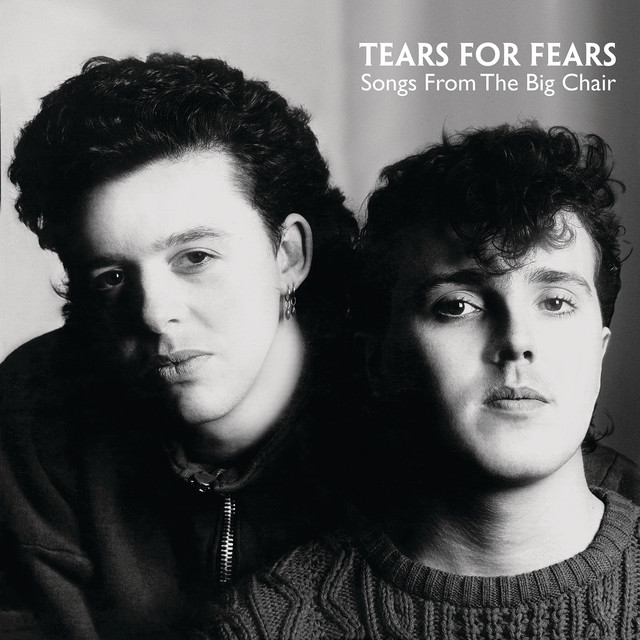
It’s 1985, and the airwaves are crackling with synths, big hair, and bigger dreams. I’m a teenager sprawled on my bedroom floor, Walkman cranked, as the opening guitar riff of Tears for Fears’ “Everybody Wants to Rule the World” slinks out of the headphones like a cool breeze through a neon-lit night. That shimmering intro—part promise, part warning—hands off to a hypnotic synth line and a drum machine that ticks like a countdown to something epic. Released on the band’s now-iconic Songs from the Big Chair, this track isn’t just a song—it’s the pulse of the ‘80s, a three-and-a-half-minute time capsule that still rules the world in 2025.
The genius of “Everybody Wants to Rule the World” lies in its tightrope walk between pop perfection and existential heft. On the surface, it’s a glossy synth-pop banger, the kind of earworm that had MTV on speed dial and packed dancefloors from London to L.A. But dig deeper, and it’s a meditation on power, ambition, and the fleeting nature of it all. “Welcome to your life / There’s no turning back,” Curt Smith sings, his voice smooth yet haunted, as Roland Orzabal’s guitar weaves a melody that’s both triumphant and tinged with dread. The title says it all: everybody wants control, but as the chorus warns, “Nothing ever lasts forever.” It’s a paradox wrapped in a pop hook, and it hits like a velvet sledgehammer.
Let’s talk sound. The production, helmed by Chris Hughes, is a masterclass in balance. That opening riff—clean, crystalline—sets the stage before passing the torch to synths that shimmer like a city skyline at dusk. The drum machine keeps a steady, unhurried pulse, like the heartbeat of a decade chasing excess but craving meaning. Add in Orzabal’s layered guitars and those lush backing vocals, and you’ve got a track that’s as cinematic as a John Hughes flick. As Rolling Stone’s Rob Sheffield noted in a 2015 retrospective, “Tears for Fears turned their synth-pop sheen into a mirror for the ‘80s—glamorous, ambitious, and just a little scared of itself.” That’s the magic: it’s a party anthem with a philosopher’s soul.
For me, this song was a lifeline. Back in ’85, I was navigating high school’s social minefield—cliques, crushes, and the constant pressure to be something. Blasting “Everybody Wants to Rule the World” through my boombox felt like a rebellion against all that. It wasn’t just escapism; it was permission to dream big without buying into the rat race. The lyrics hinted at a kind of freedom—not from wanting, but from needing to win. “Help me make the most of freedom and of pleasure,” Smith croons, and it felt like a call to live, not just to conquer. I’d play it on loop during late-night drives with friends, windows down, the world feeling infinite for a few fleeting hours.
The ‘80s were a paradox, much like the song. It was a decade of Reaganomics and shoulder pads, of yuppie greed and Cold War jitters. Tears for Fears, formed by Orzabal and Smith in Bath, England, tapped into that tension. Songs from the Big Chair was a global smash, hitting number one in the U.S. and spawning hits like “Shout” alongside this gem. “Everybody Wants to Rule the World” climbed to number one on the Billboard Hot 100, a rare feat for a song that’s as introspective as it is infectious. It was the sound of a generation chasing power but questioning its cost, a theme that resonates just as much in 2025’s hustle culture.
Today, the song’s everywhere—soundtracking TikTok trends, popping up in Netflix dramas, or blasting through a bar’s speakers as Gen Z rediscovers its magic. It’s no surprise why. In an era of algorithm-driven lives and endless scrolling, that message—live for the moment, not the crown—feels like a lifeline. I caught it on a late-night drive last week, the synths hitting just as I passed a city skyline, and for a moment, I was 16 again, full of dreams and defiance. That’s the mark of a classic: it doesn’t just endure; it evolves with you.
So, whether you’re a grizzled ‘80s kid or a 2025 newbie hearing it for the first time, crank up “Everybody Wants to Rule the World.” Let those synths wash over you, let that guitar riff lift you, and let Smith’s voice remind you: the world’s gonna spin, so you might as well dance. It’s not just a song—it’s a vibe, a philosophy, a reminder to live before the credits roll.