
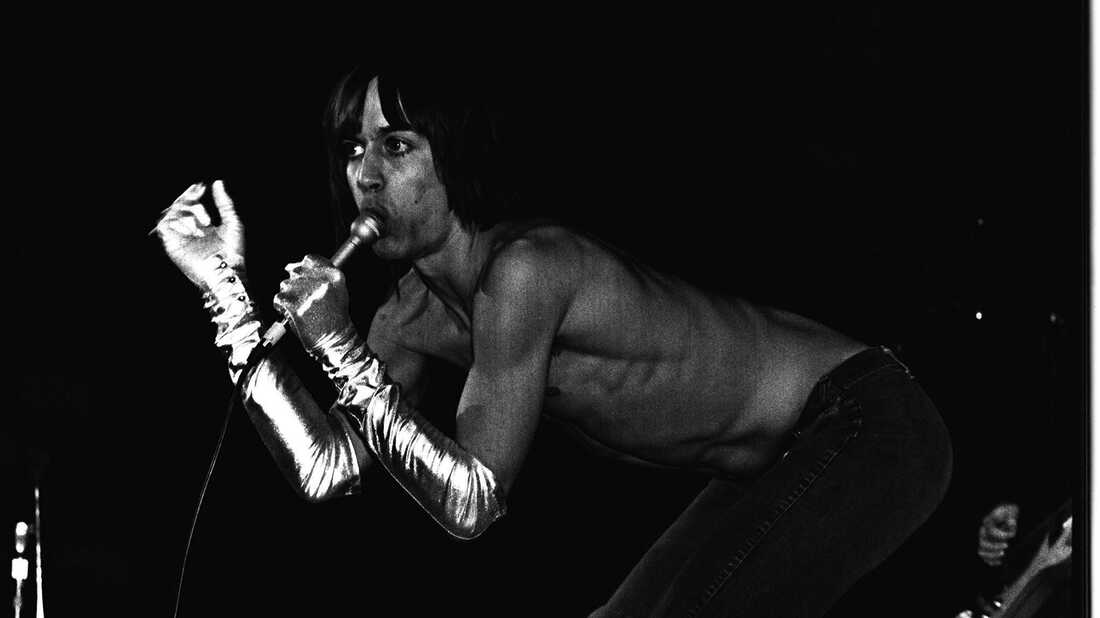
Music doesn’t just appear out of nowhere — unless you’re a magician. For the rest of us, there’s always something behind it: inspiration, influence, rebellion. Some songs echo across decades, leaving behind a sonic ripple that shapes everything that comes after. And if we’re talking about bands who didn’t just ride the wave but created the damn tsunami, then let me introduce you — or reintroduce you — to The Stooges.
Or Iggy and The Stooges, depending on the era. Either way, prepare for detonation.
Because here’s the thing: when you press play on a Stooges record for the first time, you might think it’s a new underground band trying to bring punk back from the dead. But no — this sound? It comes straight outta the late ’60s and early ’70s, right in the middle of flower crowns, peace signs, and the endless echo of “All You Need is Love.” And amid all that softness… came the scream.
I’ve been deep-diving into their music recently — rotating through The Stooges (1969), Fun House (1970), and Raw Power (1973) like a possessed vinyl priest. Each album is a sonic Molotov cocktail. Take Fun House, for example — when Elektra Records heard it, they dropped the band on the spot. “I heard nothing,” the exec reportedly said. Meanwhile, those of us with ears? We hear everything.
The Stooges weren’t here to soundtrack your summer of love. They came to burn it down and dance in the ashes. And at the center of it all? Iggy Pop. Provocateur. Wildman. Prophet. The human grenade who taught England how to be punk before punk even had a name.
Watching Jim Jarmusch’s 2016 documentary Gimme Danger flipped a switch in my brain. It showed just how far this band was willing to go to deliver the truth. There’s Scott and Ron Asheton, locked in on guitar and drums like a psychic rhythm unit. Dave Alexander, with basslines that throb like electric veins. Later additions like James Williamson brought the fire, and even Mike Watt, decades on, helped carry the torch. But let’s be real — the fuse was always Iggy.
This is a guy who once gave a watermelon-induced concussion to a concertgoer, taunted biker gangs, and jumped headfirst into crowds before it was cool. His voice swings from a deep, primal growl to a nearly childlike lilt — but it’s always got that edge. That thing. The thing that makes your soul float out of your body and pogo in place.
He refused labels. Refused the music execs. Refused to clean up his act or his sound. And guess what? They said the music wouldn’t last. But here we are. Still spinning it. Still getting Raw Power blasted into our bones.
Speaking of Raw Power, did you know David Bowie produced it? That’s right. Ziggy Stardust himself spotted something in Iggy — not just a performer, but a raw, beautiful chaos that couldn’t be faked. Bowie invited him to Max’s Kansas City, backed him on tour as a keyboardist and vocalist, and together they launched something transcendent. I mean — imagine buying a ticket to an Iggy Pop show and seeing David Bowie in the backing band. That’s not a show, that’s a moment in history.
What makes The Stooges even more powerful is how communal they were. No one in the band pulled rank. Everything — money, credit, chaos — was shared. Their influences were wide-ranging (The Doors were a big one), and Iggy’s early job at Discount Records in Ann Arbor exposed him to all kinds of genres. Whether he liked them or not, it opened his ears — and later, ours.
For the last few weeks, I’ve been deep in the Stooges rabbit hole, spinning albums, chasing bootlegs, and marveling at how this band never changed their core. They didn’t follow the trends. They didn’t get cleaner, tighter, more palatable. They stuck to the mess, the noise, the energy — and somehow kept the melody intact.
Critics called their music a mess. But to those who get it — to the real music freaks and lifers — The Stooges were telling the truth. Their lyrics were simple. Their melodies were primal. But the power? Unmatched. Raw Power, to be exact.
And that legacy? It’s not fading. The flame stays lit, burning into every generation that wants more than just surface-level rock. That wants the noise and the meaning. The Stooges didn’t just play music. They built a philosophy — one of truth, rebellion, and staying beautifully unpolished.
They weren’t here to fit in. They were here to stand out — and they still do. Whether you like it or not.