
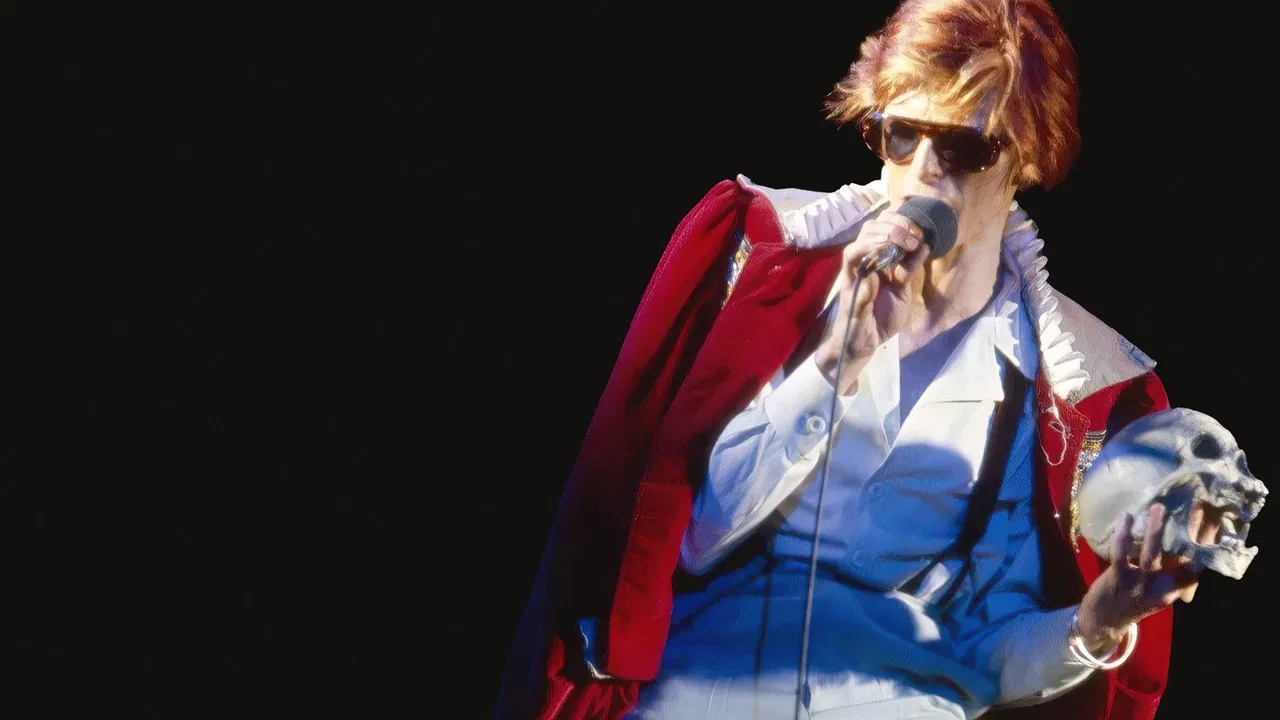
I’ve never known an artist who’s gone through as many changes — no, transformations — and still stayed revolutionary. I’ve never known a musician who reinvented themselves not just musically, but visually, theatrically, spiritually… and had a hell of a good time doing it.
We’re not talking about a chameleon for chameleon’s sake. There was always intention. Always structure. Always a reason behind the madness — each phase a chapter, each persona a lens to time. His music? A portal. A stage. A galaxy of character, magic, and meaning that felt like it chose us to carry the message.
This isn’t just any rockstar. This is Ziggy Stardust. This is Aladdin Sane. This is the Thin White Duke. This is the man who fell to Earth, gave us the soundtrack to space, and pulled us through it all with eyeliner, lightning bolts, and sonic stardust.
This… is David freakin’ Bowie.
I’ve name-dropped him before, sure — he’s been a fixture in my writing, a pillar in my glam rock retrospectives. He’s the guy who looked at kabuki theatre and thought, what if this kissed rock and roll under the disco ball? And the world followed. Sold-out shows, no matter the decade or disguise. Bowie was always ahead — and we, lucky mortals, just tried to keep up.
I first really got into Bowie during university — those years when your friends are tossing music recommendations at you like mixtape confetti. You get hit with everything. And then somewhere in that storm, Bowie lands in your ears… and something clicks.
Here’s my confession, though: I’m not a huge fan of his later records. From Let’s Dance to The Next Day, I’ve always felt a bit… distant. But Blackstar? That album was different. It wasn’t a goodbye. It felt like Bowie was going back to Mars, watching over us while we clung to the last echoes of rock and roll. That album wasn’t just a record. It was a cosmic final act.
His death didn’t just shake the music world — it cracked something open. Bowie’s music communicated with us in ways most can only dream of. He used fantasy to tackle reality. He sang in riddles that made more sense than headlines. And his performances? Pure theatre. Pure power. Like that 1972 “Starman” performance on Top of the Pops — you know the one — when he sings “I had to phone someone so I picked on you,” and points directly into the camera. He picked us. We felt that.
Live, Bowie was untouchable. The Ziggy Stardust tour was mythic. Aladdin Sane? Diamond Dogs? Thin White Duke? All different characters, all the same genius. Albums like David Live (1974), Cracked Actor (Live Los Angeles ’74), and Ziggy Stardust and the Spiders from Mars: The Motion Picture Soundtrack are essential listening. Plug in with a proper set of headphones, and suddenly your living room turns into a stage, and Bowie’s your personal ringleader.
And here’s my hot take (brace yourself): sometimes the live versions are even better than the originals. Yeah, I said it. More theatrical, more imaginative, more alive. Don’t believe me? Give those albums a spin. I’ll wait.
Look, I know I’m focusing hard on one era — that golden run from 1970 to 1980 — but honestly? That was it for me. The experimentation, the melodies, the risks. That was the peak. Sound and Vision is my personal favorite, even though some call it filler. They don’t hear the depth, the production, the history. Or Diamond Dogs — creepy, sure, but it slaps. And Scary Monsters (and Super Creeps)? Just the right amount of weird and wonderful.
Bowie wasn’t just talented — he was transcendent. And even years after his passing, we’re still discovering unheard performances, unearthed recordings that sound like transmissions from another planet.
That’s what Bowie gave us: a career not built on hoarding his art, but sharing it. Prince may have had a vault — Bowie gave us the keys to his universe.
As I write this — 7:35 a.m., David Live humming in my headphones — I’m reminded just how vital he still feels. I recently rewatched Moonage Daydream, Brett Morgen’s dazzling 2022 documentary. No talking heads. No forced narrative. Just Bowie, narrating his own life, wrapped in psychedelic visuals, archive footage, and his eternal voice. It’s not just a film. It’s a transmission.
And it sent me straight back to the records, digging through Low, Heroes, Lodger — re-listening with new ears. That whole 70s run? It doesn’t just hold up. It levitates.
David Bowie revolutionized the music industry. He redefined what it meant to be an artist. He taught us that reinvention is survival, and that sometimes, the weirdest thing you can be… is yourself.
And man, did that freakin’ slap.