
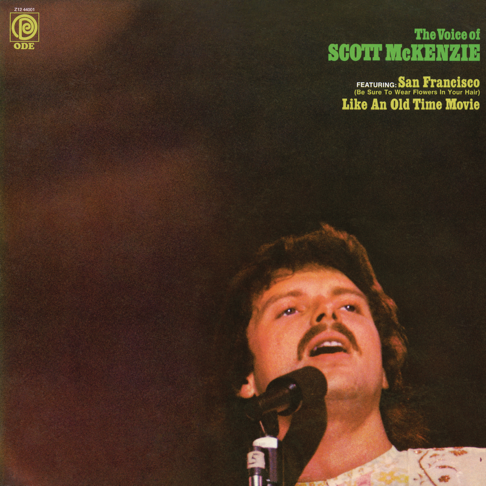
Picture this: It’s June 1967, and San Francisco is a kaleidoscope of kaftans, patchouli, and possibility. The California sun burns golden, the air hums with incense and rebellion, and if you’re lucky enough to be in the Haight, you’re shoulder-to-shoulder with dreamers who believe love can outshine hate. Greed? Checked at the door. War? Just propaganda from a world they’re leaving behind. This is the Summer of Love, and its heartbeat is a delicate, jangly anthem: Scott McKenzie’s “San Francisco (Be Sure to Wear Flowers in Your Hair).”
You might know it as the wistful underscore to Forrest Gump’s cross-country sprint—yeah, run, Forrest, run!—but this song is no mere soundtrack filler. It’s a time capsule, a three-minute portal to a moment when idealism wasn’t just a buzzword; it was currency. Written by John Phillips of The Mamas & The Papas to hype the Monterey Pop Festival, “San Francisco” transcended its promotional roots to become the unofficial hymn of a generation chasing utopia.
Close your eyes and listen. That celesta chimes like a teardrop catching light, fragile but piercing. The acoustic guitar strums raw, like it’s plugged straight into your soul. The drums? A steady pulse, like the open heartbeat of a city ready to embrace every runaway, every dreamer. And then there’s McKenzie’s voice—gentle, never fragile, soaked in an earnestness that makes you believe. “If you’re going to San Francisco, be sure to wear some flowers in your hair,” he sings, and it’s not just a lyric. It’s an invitation. A whisper that says, Come. There’s something better here.
Phillips, a master of melody with a knack for bottling cultural lightning, didn’t just write a song; he crafted a manifesto. Released in May 1967, “San Francisco” hit the airwaves as thousands flocked to the Haight-Ashbury district, drawn by rumors of free love and free thought. By the time Monterey Pop kicked off—Jimi Hendrix setting his guitar ablaze, Janis Joplin howling her truth—the song was everywhere, peaking at No. 4 on the Billboard Hot 100. It wasn’t just a hit; it was a beacon.
But let’s not romanticize too hard. The Summer of Love wasn’t all flower crowns and good vibes. By ’68, the Haight was overcrowded, drugs turned darker, and the dream started fraying like a cheap paisley shirt. Critics scoffed—still do—calling the hippie ethos naive, a fleeting high before the crash of Altamont and Nixon’s America. Yet “San Francisco” endures, not as nostalgia but as a spark. You hear it in the strum of a busker at a modern festival, where strangers share water bottles and hope. You see it in protests where peace signs rise higher than fists, in vinyl grooves worn thin but never out of meaning.
McKenzie himself was no rock god. A journeyman folk singer, he’d kicked around with Phillips in earlier bands, his voice more earnest than electrifying. But that’s why “San Francisco” works. It’s not larger-than-life; it’s human. McKenzie wasn’t selling a fantasy—he was sharing a fleeting truth. He passed in 2012, but his song still floats over San Francisco’s hills, a reminder of what was and what could be.
Today, when division feels like the default setting, “San Francisco” is a quiet rebellion. It’s not about recapturing 1967—that’s gone, man, like a joint passed one too many times. It’s about remembering that a better world once felt possible, and maybe, if we listen close enough, it still is. So go ahead, put the needle on the record. Let that celesta shimmer. Wear some flowers in your hair. And for a moment, believe.