
Let’s get this out of the way: I don’t get Radiohead. No shade, no edge, just truth. OK Computer doesn’t send me into a cosmic trance. Kid A isn’t my idea of a candlelit vibe. If Thom Yorke’s warbling through a café’s speakers, chances are I didn’t pick the playlist—some barista with a man-bun and a penchant for existential dread did. Say this out loud, and you get looks like you’ve denied gravity or declared water isn’t wet. One classmate stared at me like I’d torched his vinyl collection. But that’s my deal. We all have our blind spots, and Radiohead’s mine.
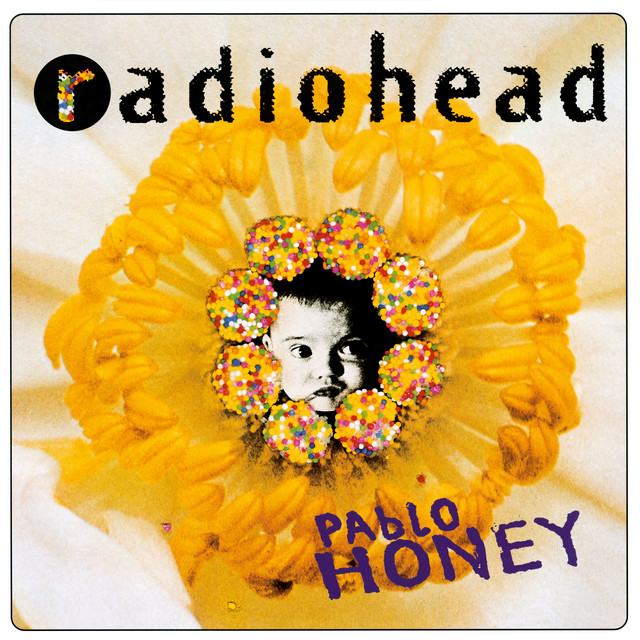
Except for one song. The obvious one. The one diehards roll their eyes at, calling it “basic” or “entry-level.” Yeah, I’m talking about Creep, the 1992 gut-punch from Radiohead’s debut, Pablo Honey. It’s the only track that grabs me by the collar, shakes me, and doesn’t let go. And you know what? It freakin’ slaps.
From the first note, it’s a mood. That mellow guitar riff—Jonny Greenwood’s hesitant, chiming chords—feels like stepping into a party where you’re the odd one out, clutching a warm beer and second-guessing your existence. It’s awkward, teetering on the edge of dull. Then, at 0:46—boom—Greenwood’s distortion rips through like a Molotov cocktail, blowing the doors off. The song surges, retreats to uncertainty, then erupts again, mirroring that mental tug-of-war between self-doubt and defiance. It’s not just music; it’s a wave you ride, messy and alive.
Lyrically, Creep doesn’t flinch. “I’m a creep / I’m a weirdo,” Yorke sings, laying bare the ache of not fitting in. It’s not chasing validation—it’s owning the scars, shouting them from a rooftop. We’ve all been there: the outsider, the misfit, the one who doesn’t belong. In 2025, with X feeds spitting venom and the world feeling like a fractured funhouse, that raw honesty hits harder than ever. It’s not a plea; it’s a middle finger to the cool kids’ table.
Yorke’s vocals? Normally, I find his wail a bit… whiny (sorry, Radiohead stans). But here, that strained, awkward yell is perfect—raw, vulnerable, human. “I hated my voice on it,” Yorke admitted years later in a Rolling Stone interview, but that’s the magic: it’s not trying to be artsy, it just is. The band didn’t even want it as a single—legend has it Greenwood’s iconic chord crunches were a sabotage attempt to make the song “less sappy.” Joke’s on them: Released in September 1992, Creep became their breakthrough, hitting No. 34 on the Billboard Hot 100 after a slow climb, banned by BBC Radio 1 for being “too depressing” only to be embraced by alt-rock stations worldwide.
Rewind to Oxford, early ‘90s. Radiohead—then just five scrappy art-school kids—were nobodies, grinding in a post-Nirvana world. Pablo Honey was their scrappy debut, and Creep was the fluke that almost wasn’t. Recorded in a single take, produced by Paul Kolderie and Sean Slade, it was a raw nerve wrapped in a grunge-pop shell. Critics dismissed the album as derivative, but Creep stuck, covered by everyone from Prince to Pretenders, sampled in hip-hop, and immortalized in karaoke bars. By the time OK Computer dropped in ‘97, Radiohead had outgrown it—Yorke called it “old news”—but fans never did.
Why does Creep endure? It’s not just the dynamics—though that quiet-loud-quiet structure is a masterclass. It’s the feeling. In a world of curated feeds and performative cool, Creep is the friend who says it’s okay to be a mess. You hear it in dive bars, in late-night car rides, in moments when you’re screaming along, not caring who hears. It’s the soundtrack to every time you felt like the weirdo and owned it anyway. I’m not diving into In Rainbows anytime soon—Radiohead’s still not my jam. But Creep? That one stays. It’s the outcast’s anthem, loud enough to drown out the noise.