
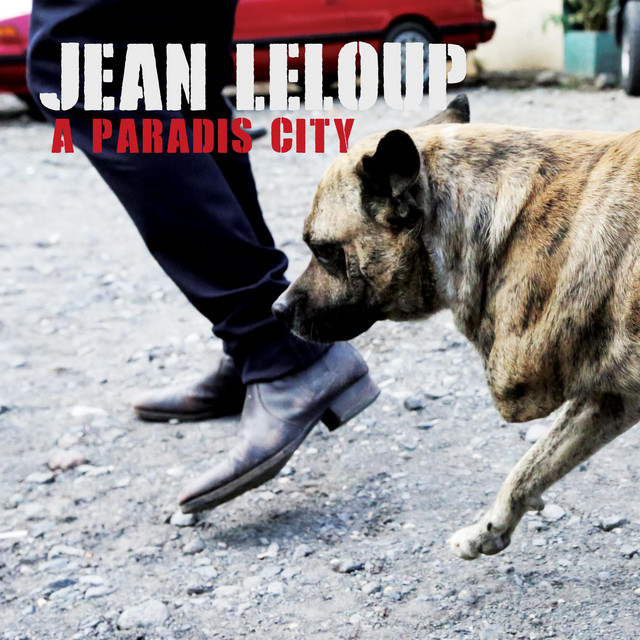
Picture this: it’s 2016, and Jean Leloup, Quebec’s wild-eyed troubadour, is tearing through “À Paradis City” like a storm ripping across the St. Lawrence. The track, from his album Paradis City, is a glorious mess of electric chaos—riffs that snarl like stray dogs, lyrics that dart like fireflies, and that unmistakable Leloup eccentricity, equal parts poet and punk. It’s the kind of song you’d hear blasting from a Montreal dive bar at 2 a.m., where the air smells of cheap whiskey and existential dreams. Fans didn’t just listen to it; they felt it, like a jolt to the soul.
Fast-forward to 2022, and enter Fredz, Montreal’s mellow-voiced maestro of chill-hop, who’s got the audacity to touch this sacred relic. A club-style cover of “À Paradis City”? It’s like hearing Bon Iver remix “Sympathy for the Devil” or Kurt Cobain covering ABBA. You blink, you double-take, you brace for disaster. But then you hit play, and—mon dieu—it works.
Fredz doesn’t try to out-weird Leloup. He’s not here to wrestle with the original’s feral energy. Instead, he strips it down to its bones, draping it in a breezy acoustic glow that feels like a late-night cruise through Montreal’s neon-lit Plateau. Soft piano flourishes ripple like moonlight on water, and a club-ready beat pulses underneath, subtle but insistent, like a heartbeat you didn’t know you were missing. It’s satin-smooth, never soulless, trading Leloup’s raw voltage for a vibe that’s all after-hours cool. Where Leloup’s version is a bar fight, Fredz’s is a whispered confession in the booth across the room.
The vocals are where Fredz seals the deal. His voice—gentle, unforced, just distant enough to let the song breathe—floats over the production like smoke. There’s no strain, no overreach. Every note lands like it was meant to be there, perfectly in step with the beat. It’s a reimagination, not a reinvention, and that’s the magic trick. Fredz doesn’t try to be Leloup; he’s just Fredz, tipping his cap to a legend while carving his own path.
Let’s talk context. Jean Leloup, born Jean Leclerc, is Quebec’s musical shapeshifter, a chameleon who’s been everything from folk hero to rock renegade since the ‘80s. His “À Paradis City” is a love letter to Montreal’s gritty glamour, a track that captures the city’s pulse—its artists, its dreamers, its late-night wanderers. Fredz, meanwhile, is the new kid on the block, a 20-something rapper-producer whose 2021 album Ciel orageux made waves for its introspective, jazz-inflected hip-hop. Taking on Leloup is like a rookie stepping into the ring with a heavyweight champ. And yet, Fredz doesn’t flinch.
Walk into any Montreal café, from Le Plateau to Mile End, and you’ll hear the debate: is Fredz’s cover a bold reinvention or a polite betrayal? Purists clutch their vinyl copies of Paradis City like sacred texts, muttering about sacrilege. But others—especially the younger crowd sipping oat-milk lattes—nod along to Fredz’s version, earbuds in, lost in its chill groove. At a recent show at Club Soda, Fredz performed the cover live, and the crowd swayed like they were at a rooftop party, not a rock revival. When I asked a fan, 24-year-old Sophie, what she thought, she shrugged and said, “Leloup’s version is my soul; Fredz’s is my vibe.”
Would Jean Leloup himself approve? Hard to say. The man’s a mystery, prone to disappearing into the Quebec wilderness or popping up with a new persona. But something tells me he’d smirk at Fredz’s take, maybe even raise a glass. Leloup’s always been about evolution, not staying still. He’d probably appreciate seeing his song slip into new shoes—even if they’re a bit cleaner than his usual muddy boots.
So where is Jean Leloup these days? Rumors swirl: he’s writing a novel, busking incognito in Old Montreal, or maybe just fishing somewhere north of Quebec City. Wherever he is, his shadow looms large, and Fredz’s cover is proof that “À Paradis City” still has legs. It’s not just a song—it’s a conversation across generations, a reminder that great music doesn’t just live in the past; it dances into the future.
As for Fredz, he’s out there, quietly rewriting the rules of Montreal’s music scene. His “À Paradis City” isn’t a challenge to Leloup’s throne—it’s a nod, a wink, a hand extended across time. And in a city that thrives on reinvention, that’s more than enough.