Music doesn’t just soundtrack our lives — sometimes, it guides them.
There are records I’ve carried with me for decades. Albums that feel like old friends, songs that walked beside me through college hallways, heartbreaks, early morning commutes, and quiet late-night revelations. Some music becomes so intertwined with who you are that when the artist behind it leaves this world, it feels like a piece of you goes with them.
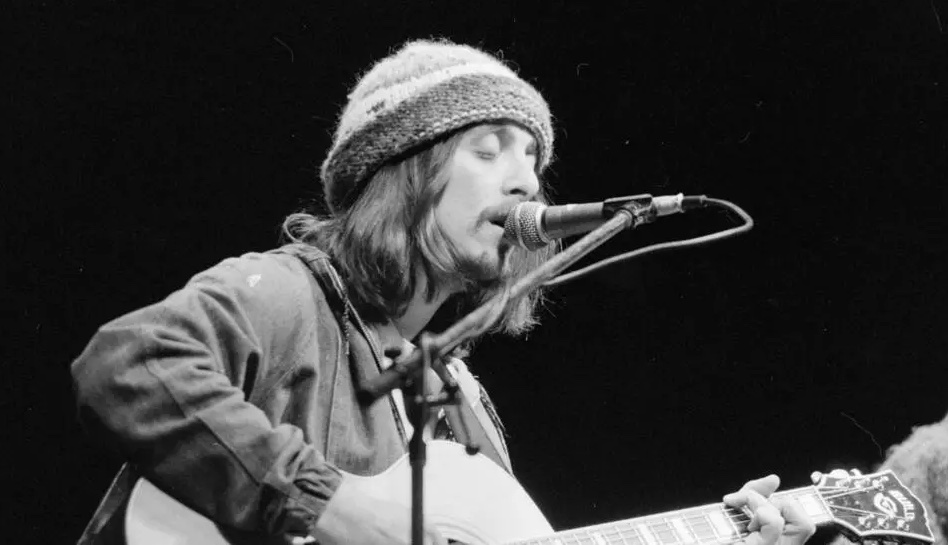
That’s how I felt on June 24th, 2025, when the news broke that Serge Fiori — the voice, the poet, the beating heart of Harmonium — had passed. I froze. It didn’t register at first. It was one of those losses that feels too big, too layered, to make sense right away.
So I did what felt natural. I put the records on — all of them. The full Harmonium catalogue, plus the Fiori-Séguin collaboration. And as that familiar warmth filled the room, I was transported back to when those songs first found me.
Back to college. Back to the HMV floor where I worked, discovering music on borrowed shifts and speaker systems. Back to the moment when a colleague spun the band’s self-titled debut and “Harmonium,” the track, came on — and I swear, my whole body felt it. Goosebumps. The moment.
There’s this line in the song:
“Imaginez qu’un homme-musicien
Vienne voir si je suis vivant
Chargé par ses mille instruments
Y en avait un pour moi, justement…”
Roughly translated, it’s a vision of a musician arriving with a thousand instruments — one meant just for you. And all he says is: Listen.
God, what a line. What a mission statement.
Harmonium’s music is more than folk, or rock, or even prog — it’s elemental. It’s what happens when melody, poetry, and intention meet at some sacred intersection. Their debut (Harmonium, 1974) is stripped-down and pure — three musicians and an open heart. Songs like “Pour un instant” and “Un musicien parmi tant d’autres” sound like campfire hymns for a generation that was still trying to find its voice.
But then came Si on avait besoin d’une cinquième saison (1975), and all bets were off.
That album… It’s in my top three of all time. Hell, it might be number one. Rolling Stone even ranked it among the 50 greatest prog rock albums ever — and yeah, they got that one right. It’s the only francophone album on the list, and it deserves its place. The melodies are pure sweetness, every track lush and alive. “Vert,” “Dixie,” “Depuis l’automne,” “En pleine face” — each one a universe.
Then there’s “Histoires sans paroles”, the 17-minute closer. It’s not just a song. It’s a journey. A sunrise. A spiritual experience in movements. Goosebumps, every damn time.
If the first two albums were personal, their final studio record, L’Heptade (1976), is metaphysical. It dives deep into the seven levels of consciousness, marrying Serge Fiori’s spiritual lyricism with Neil Chotem’s breathtaking orchestral arrangements.
The album was recorded in Fiori’s home — and you can hear that intimacy in every note. From “Chanson noire” to “Comme un fou” to “Comme un sage,” it’s an odyssey. It doesn’t just play — it awakens.
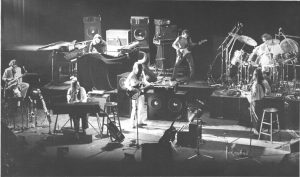
And for those who haven’t seen it, the Harmonium en Californie documentary is a must. Shot by the National Film Board of Canada, it captures the band’s trip to L.A.’s Starwood Club and includes candid interviews and stunning performances — including excerpts from the Deux cents nuits à l’heure (1978) album Fiori made with Richard Séguin. Songs like “Ça fait du bien” and “Viens danser” still hit with full force today.
Serge Fiori wasn’t just a musical genius. He was a fucking musical genius. Full stop. Every note, every lyric, every arrangement — it all had meaning. He never phoned it in. He put everything into the music. Purpose. Spirit. Harmony.
And that’s why the recent tribute concert — broadcast live, and now living on YouTube — hit so damn hard. Watching it, I cried. Not because I was sad, but because I was grateful. Grateful that this music exists. That it found me. That I still have it.
That we still have it.
Because here’s the thing: Harmonium didn’t wrap their music around us. We wrapped ourselves around them. We clung to these records like lifelines, because they told the truth. They made us feel seen. Heard. Alive.
Fiori’s gone, but the music isn’t. Not even close.
These songs will keep walking with me. Through the rest of this weird, winding life. Through joy, grief, change, and the little moments in between. And every time I hear those first few notes, I’ll remember what he told us:
“Il m’a dit de vous dire d’écouter.”
He told me to tell you to listen.
And we still are.